Hyperliquid is a perpetual decentralized exchange (DEX) that operates on its own Layer 1 (L1) blockchain. It has roughly $1B in daily volume, around 190k users, and supports an impressive 133 assets! Recently, it has garnered significant attention, particularly after the flash crash on August 5th, which was triggered by the global unraveling of the yen carry trade. Despite the market turmoil, the DEX continued operating seamlessly, with liquidations processing without issues. This makes them the first example of a decentralized exchange that offers a centralized exchange (CEX) user experience, without relying on centralized custody or intermediaries. In this article, we delve into why Hyperliquid deserves your attention.

Table of Contents
Introduction to Hyperliquid
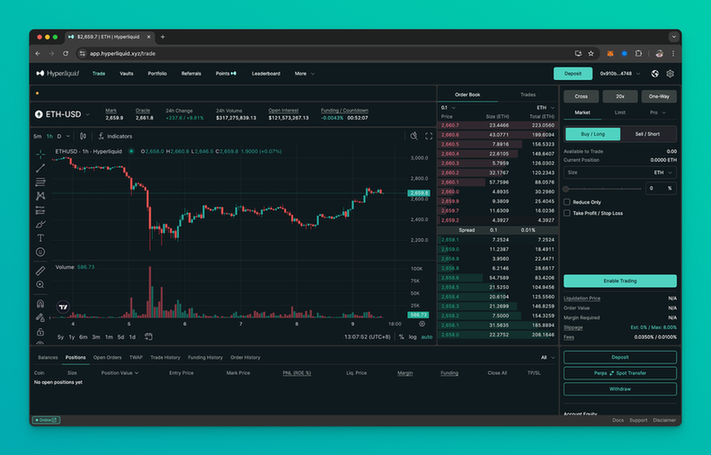
Hyperliquid has made its mark in decentralized trading by pioneering a unique approach within the decentralized exchange space. Established as an order book-based DEX, they quickly became popular within the perpetual trading community, emerging as a primary platform for many traders.
First and foremost, Hyperliquid’s focus on on-chain perpetual trading has enabled it to redefine the boundaries of decentralized trading. By offering a smooth, user-friendly experience, it has captivated the decentralized trading community, attracting a loyal user base. This emphasis on delivering an exceptional trading experience has set them apart from its competitors and solidified its position as a leader in the space.
Moreover, Hyperliquid’s investment in its infrastructure—by building its own L1 and innovating on its virtual machine—has allowed it to expand beyond just perpetual trading. This robust infrastructure supports a wide array of financial activities, making it a versatile platform for traders employing diverse strategies.
Hyperliquid’s commitment to liquidity and user retention has also played a crucial role in its success. Despite being relatively new in the DEX space, they have attracted substantial liquidity, ranking among the top 20 L1s by total value locked (TVL). This liquidity, coupled with a dedicated user base, has fostered a thriving ecosystem that supports a vibrant trading community.
The Innovation
Innovation is key to the success of any DEX. Rather than merely replicating existing models, Hyperliquid has focused on offering something new and superior to its competition. This commitment to innovation is evident in every aspect of its platform, setting it apart and drawing users seeking an unparalleled trading experience.
Hyperliquid places great importance on listening to its users to understand their needs and preferences. By building a platform with user-friendly interfaces, reliable APIs, and high liquidity, the platform ensures that it remains competitive and appealing to a broad range of traders.
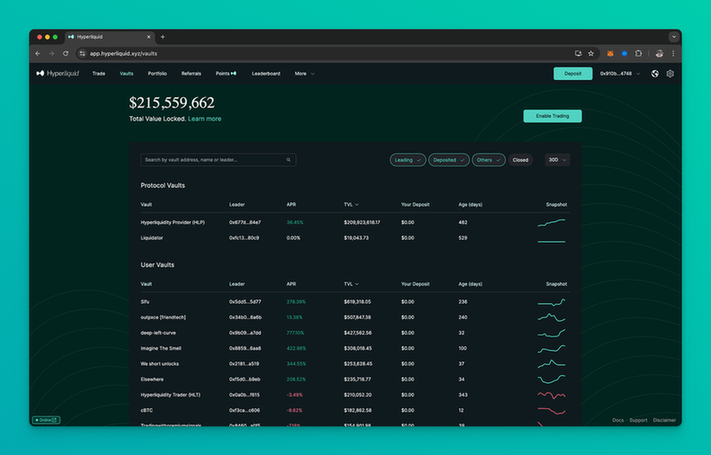
Building a successful DEX also requires perseverance in overcoming challenges. Hyperliquid acknowledges that creating a decentralized exchange involves navigating numerous obstacles. The team’s strong background in quantitative trading and deep understanding of lower-level infrastructure have been instrumental in addressing these challenges and driving the platform’s success.
Custom Bridge for Seamless Asset Transfers
A key component of Hyperliquid’s success is its custom bridge, which enables seamless asset transfers across different blockchains. This bridge ensures interoperability, granting users access to a broader range of assets. The team dedicated significant time and effort to refining the bridge, ensuring a smooth user experience and secure asset transfers.
The bridge’s trust model is crucial to its functionality. It is secured by a quorum of L1 validators, who validate transactions to ensure security. In the event of an exploit, the bridge can be locked, requiring a quorum of cold wallet signatures to unlock it, adding an additional layer of security. This trust model instills confidence in users, assuring them that their assets are safe during the bridging process.
Looking ahead, the team plans to expand its bridging capabilities to support a broader range of assets and cater to institutional capital.
Native Token and Staking
There are no plans to require the L1 token for trading. This allows users to trade without needing to purchase a separate token solely for that purpose. Instead, the platform employs a unique mechanism that charges trading fees based on fill rate and transaction volume. This approach ensures users are charged fairly, protecting against potential DDoS attacks, whether state or throughput-based, without the need for a separate gas token.
The points program has successfully attracted users without relying on complex marketing strategies. The simplicity and opacity of the points system have proven effective in engaging users and encouraging them to explore the platform.
Long-Term Vision and Self-Sustainability
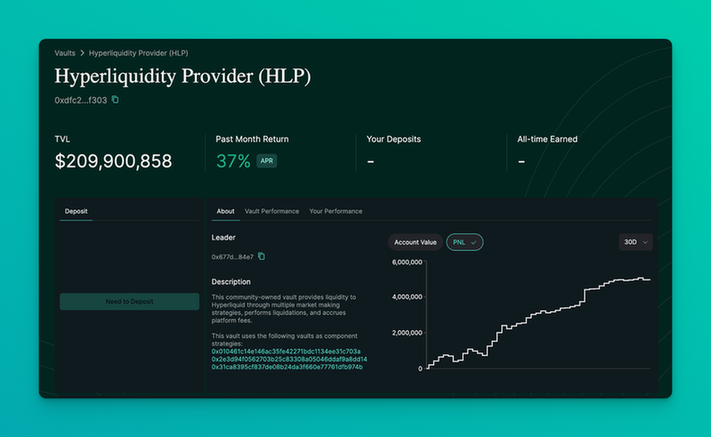
Hyperliquid has chosen to bootstrap its development without external funding. The team has consciously decided not to collect any fees from the protocol, ensuring that all fees go towards the insurance fund and HLP token holders. HLP, the native vault token, acts as an AMM pool for stakers, offering around 37% APR as of August 9, 2024. For a comparison of yields on Cyan, the Cyan Vault (ETH) is returning ~28% APY, and the Cyan Vault (USDC) is ~27% APY – read more about our vaults here.
The decision to bootstrap the protocol stems from the team’s belief in its long-term potential. By forgoing short-term gains, the team can focus on building a platform that has the potential to revolutionize finance on the blockchain. This long-term focus is reflected in low fees, designed to attract new users and make DeFi more accessible.
In addition to avoiding external funding, Hyperliquid aims to maintain neutrality at the base layer of the protocol. By not having any insiders who could influence the platform’s direction, it is positioning itself as a truly decentralized, community-driven project. This commitment to neutrality and decentralization aligns with the team’s vision of creating a platform that serves as the foundation for all financial transactions in the future.
A Lean and Focused Team
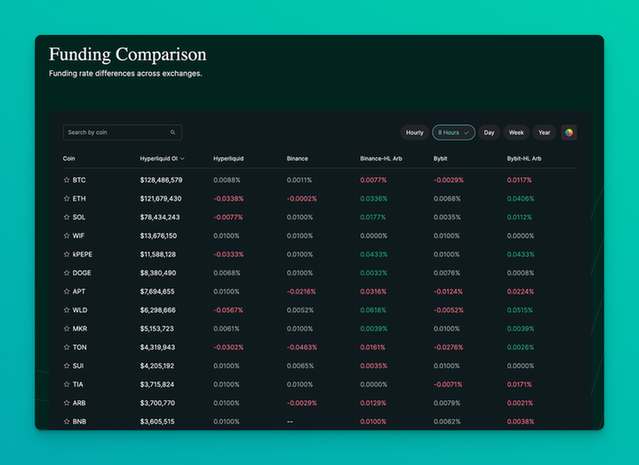
Hyperliquid is driven by a small, focused team of fewer than 10 people, including five engineers. Their approach to innovation is rooted in first principles thinking, prioritizing the development of entirely new solutions rather than emulating competitors. This philosophy has led to the creation of unique features such as the Vaults primitive, permissionless swap listings, and gasless on-chain order books. These innovations have set them apart in the industry and earned it a reputation for groundbreaking solutions.
The team’s commitment to innovation extends beyond product development; they prioritize transparency and community-driven development, recognizing the importance of user feedback and collaboration. By continuously inventing new features and focusing on user needs, Hyperliquid aims to contribute to the advancement of the DeFi space and drive the industry forward.
Wrapping it all up
Hyperliquid is redefining the decentralized exchange landscape with its innovative approach, robust infrastructure, and user-centric design. By building on its own Layer 1 blockchain and pioneering features like the HyperBFT consensus mechanism and a custom bridge for seamless asset transfers, they are setting new standards in DeFi. The platform’s commitment to decentralization, transparency, and long-term sustainability positions it as a key player in the future of finance, offering traders a reliable and advanced platform for their financial activities. With its forward-thinking vision and dedicated team, Hyperliquid is poised to continue leading the evolution of decentralized finance.